
Music like Move D: 10 artists and labels to explore
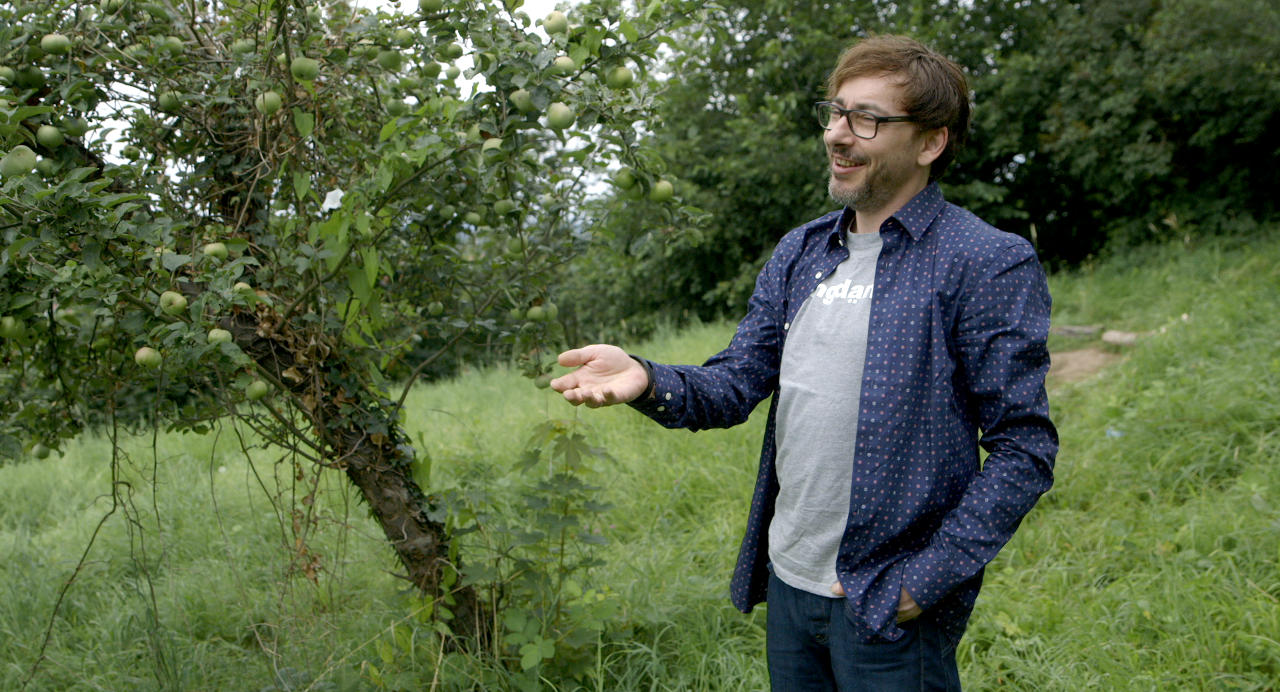
Move D is the principal recording name of David Moufang, a producer from Heidelberg whose catalogue moves between deep house, techno, ambient music, electro, and downtempo electronics. His 1995 album Kunststoff established that range early, combining club rhythms with slower pieces and more abstract electronic production.
Moufang’s Discogs credits reveal a large network of joint projects, live groups, labels, and studio partnerships. Some collaborators share his ambient and experimental work, while others connect him to German deep house, Detroit-influenced production, and the rawer US house underground.
Here are ten artists, projects, and labels that fans of Move D should explore.
Deep Space Network
Deep Space Network was formed by David Moufang and Jonas Grossmann. The pair began working together around Heidelberg during the early 1990s, initially using the Earth to Infinity name before establishing Deep Space Network as their principal joint project. Grossmann also worked with Moufang on the organisation of Source Records.
The project places more emphasis on ambient techno, dub-influenced space, and extended electronic arrangements than much of Move D’s later house catalogue. Releases including Big Rooms retain Moufang’s attention to rhythm but give synthesisers and environmental textures more room to develop. Deep Space Network is the clearest starting point for listeners interested in the electronic foundations behind Move D.
Reagenz
Reagenz is the partnership between Moufang and Jonah Sharp, the British producer who recorded as Spacetime Continuum after settling in San Francisco. Their first self-titled album was assembled from sessions recorded in San Francisco and at reSource Studio in Heidelberg during 1994.
The project returned with Playtime, issued by Workshop in 2009, and later releases including The Periodic Table. Reagenz draws together Sharp’s ambient-techno background and Moufang’s loose approach to house rhythm. The music frequently develops through extended passages rather than conventional club-track structures, making it a useful bridge between Move D’s dance records and his more spacious work.
Benjamin Brunn
Hamburg producer Benjamin Brunn has maintained one of Moufang’s most productive studio partnerships. Their first full-length collaboration, Let’s Call It a Day, was recorded at reSource Studio in Heidelberg in February 2006 and released later that year. Its seven pieces move between deep house, ambient music, and restrained techno.
The pair continued through Songs from the Beehive on Smallville, followed by records including New Horizon, Honey, and East to West. Small rhythmic and harmonic changes accumulate across these releases, giving the music a patient quality without removing its connection to the dance floor. Brunn is the most direct recommendation for listeners drawn to Move D’s warm synthesisers and long-form arrangements.
Magic Mountain High
Magic Mountain High brings Move D together with Gal Aner and Jordan Czamanski of Juju & Jordash. The trio developed as an improvisational live project, using hardware to build house, techno, and acid tracks without fixing every part in advance.
Their first vinyl release, XX, appeared through Workshop in 2012. It was followed by Live at Freerotation, Tiny Breadcrumbs, and other recordings drawn from the group’s live activity. The project preserves the swing and melodic detail associated with Move D while allowing tracks to change direction through interaction between the three musicians. Juju & Jordash and Czamanski’s solo work as Jordan GCZ provide further routes into this part of the network.
Pete Namlook and FAX
Pete Namlook worked with Moufang across a long sequence of numbered Move D/Namlook albums. Releases such as Wired, Space & Time, Raumland • Sphäre, and the three Stranger albums appeared within Namlook’s FAX catalogue and explored ambient music, downtempo electronics, deep techno, and future jazz.
Moufang and Namlook also recorded together as Koolfang. These sessions move further away from compact house arrangements than most Move D records, often using long pieces that gradually introduce rhythm, keyboards, and electronic textures. Namlook’s wider catalogue is worth exploring for listeners interested in the ambient and German electronic-music lineage running beneath Moufang’s club productions.
Source Records
Source Records was based in Heidelberg and created and maintained by David Moufang and Jonas Grossmann. It provided a home for the early work surrounding Move D, Deep Space Network, Reagenz, and related Heidelberg projects.
Move D’s Kunststoff was released by Source in 1995, while Conjoint’s Earprints later demonstrated the label’s interest in live instrumentation, jazz, and electronic production. Rather than representing a single house sound, the Source catalogue documents the environment from which Move D developed. It is the best label-level entry into his 1990s work and the musicians operating around reSource Studio.
Workshop
Workshop has hosted several branches of the Move D catalogue. Moufang released the early Workshop 02 EP and later Workshop 13 under his principal alias. The label also issued Reagenz’s Playtime and the first Magic Mountain High record.
Workshop opens the circle beyond Move D’s direct collaborators. Its catalogue includes Lowtec, Kassem Mosse, Even Tuell, Madteo, Benjamin Brunn, Ital, and a later generation represented by artists such as Willow and Kiki Kudo. Much of the label’s music shares Move D’s preference for house and techno that leaves imperfections, unusual edits, and changes in texture intact.
Smallville Records
Smallville Records was founded in 2005 by Steinhoff, Lawrence, and Stella Plazonja. The Hamburg label became a regular outlet for Moufang’s work with Benjamin Brunn, releasing Songs from the Beehive, New Horizon, Honey, and a vinyl edition of Let’s Call It a Day.
Smallville also issued Move D and D-Man’s All You Can Tweak and paired a Move D and Brunn track with Lawrence on In the Beginning / Don’t Forget. From there, listeners can move into records by Lawrence, Smallpeople, Christopher Rau, and other producers who approach deep house through detailed sound design and restrained arrangements.
Soulphiction and Philpot
Move D’s relationship with Philpot connects his catalogue to Soulphiction and the Stuttgart house scene around the label. Philpot issued Move D’s Got Thing in 2007. Move D and Soulphiction later shared In the Limelight, with one side assigned to each artist.
The label’s fiftieth release placed Move D beside Juju & Jordash and other Philpot contributors. Soulphiction’s productions provide a strong outer-circle recommendation for Move D listeners: both artists use samples, live-feeling drums, and uneven rhythmic details without losing the direct function of a house record. The wider Philpot catalogue extends that approach through soul, jazz, and Detroit-informed house.
DJ Jus-Ed and Underground Quality
DJ Jus-Ed connected with Move D through a series of live and studio records on Underground Quality. It’s a Struggle appeared in 2011, while Jam Session Vol. 1 documented a performance recorded at Tape in Berlin in November 2010. The partnership continued with the double twelve-inch Brother’s EP in 2015.
These releases place Move D inside the rawer US deep-house network associated with Underground Quality. Jus-Ed’s catalogue favours direct drum programming, extended mixes, and sparse arrangements. The label also provides a path towards artists including Fred P and Levon Vincent, whose work shares the same interest in deep house as functional club music rather than polished background listening.
Follow Move D on Sound Shelter to see new releases and stores with copies in stock. The Sound Shelter Move D collection covers more records from his solo catalogue and collaborative projects.
Keep digging
Browse more music from independent artists, labels, and stores.